Two kinds of Paradises
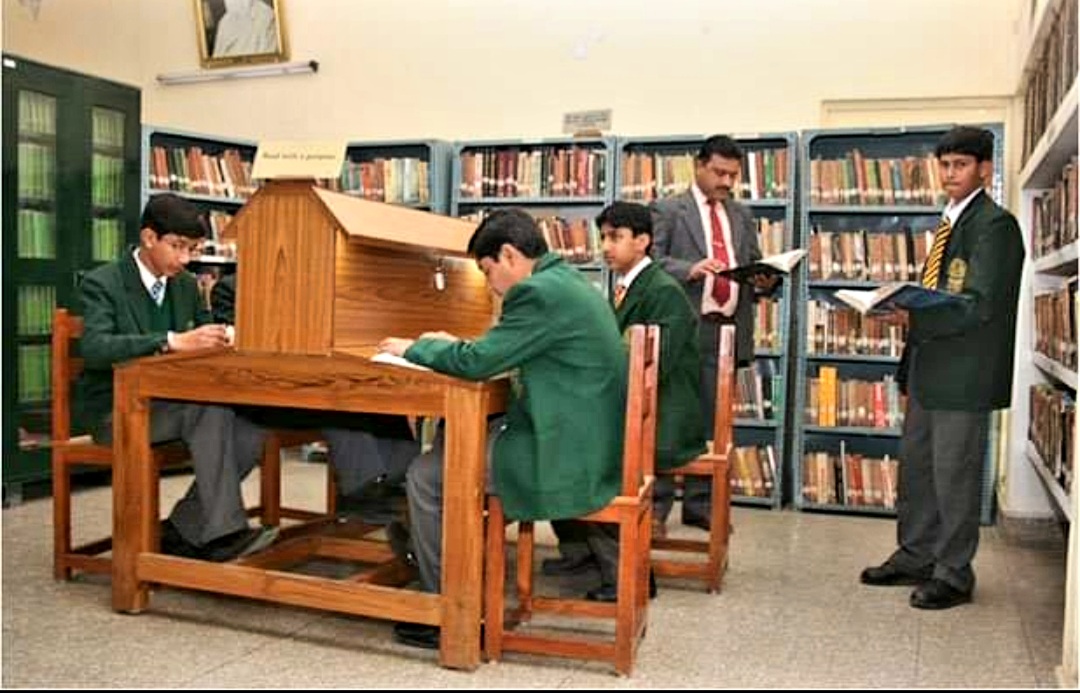 |
| A view of Sawan's library |
Libraries are archives of
longings. Both the writers whose books are stored on the racks and the readers
whose souls delve into those racks are dreamers of sorts. Books belong to
people with infinite longings.
The death of
a library is very painful to those who love books. One of my beloved libraries
was killed in 2015. Who would want to kill a library that was pulsating with
life and that too young life? Such questions have become redundant in India,
especially after 2014.
One religious
cult called Radha Soami Satsang Beas [RSSB] killed the library I’m speaking
about here. It was Sawan Public School’s library in Delhi. The entire school
was killed by a godman and his followers just because they wanted to create
parking spaces for devotees. I have narrated that story in detail in two of my
books: Autumn
Shadows and Black
Hole.
Writer Borges
was of the opinion that Paradise would be a kind of library. What else can
Paradise be for those whose hearts are restless until they rest in wisdom? The
irony about the death of Sawan Library was that those who promised Paradise to
devotees killed it.

There are two
kinds of Paradises. One belongs to genuine questers, those who read, meditate,
and dream. The other belongs to those who follow some guru blindly. These blind
followers are the most dangerous people on the earth. They have committed the
most gruesome crimes like burning heretics, hunting witches, crusading against
god’s enemies, gassing helpless people in concentration camps, lynching perceived
enemies on roads…
The devotees
of the RSSB godman killed a school and its library with some vengeance. They
had already encroached upon acres and acres of reserved forests in the same region
earlier. The Hindustan
Times dated 30 Apr 2014 reported
that RSSB had occupied no less than 123 acres of forest land in Asola-Bhatti
region (where Sawan Public School also existed). There were reports earlier
about similar landgrabs in other regions too by this same cult. This cult has
an entire township of its own in Beas, Punjab where the government is utterly
powerless because they have their own rules and regulations there including a
meticulous traffic system. A few months back, the Times
of India reported RSSB’s
landgrab in the eco-sensitive Aravali forest in Haryana.
It’s no
surprise then that they get an entire school demolished. Landgrabbers can never
enter the real Paradise.
In May 2015,
Sawan Public School’s library was razed to ground by mammoth bulldozers.
Shakespeare and Shelley, Ramchandra Guha and Salman Rushdie all lay tied
together by jute threads and were eventually carried away by scrap dealers.
I am told
that the entire place where the school stood is now mere wasteland used as
parking area for the godman’s devotees who come to listen to his sermons once
or twice a year. These devotees must be entering their own versions of Paradise
on such occasions.
I have retired
to my village, to the land bequeathed by my forefathers where no godman will ever
have entry. I can listen to the sobs that underlie Hamlet’s soliloquies in
peace now. I can feel Shelley’s West Wind on my cheeks. I can contemplate on
Zorba’s rustic wisdom with the music of cicadas among my crotons. My own Paradise.
 |
| Sawan Library |
xZx
Hari OM
ReplyDelete...and the final paragraph reveals that you have dreamed, searched, and found your own particular paradise on earth. That is all that is needed! YAM xx
But I do worry occasionally about these religious organizations that keep deluding people as well as government and even the environment. And the way they pretend to be custodians of public morality.
DeleteThis is a most touching writeup indeed. Was touched by the manner in which you have described the anguish of losing the library. The school, unfortunately is more and the dreams of children snuffed out rather rudely.
ReplyDeleteIt was catastrophic. The cult also manhandled staff who questioned them. It was impossible to believe that religious people were doing it all.
DeleteI cry everytime my mind comes across the name; Sawan. There destruction is inevitable. I just hope I have the greatest role in it.
ReplyDeleteDear sir each and every word in your blog is true and heart touching. We have seen all this with our own eyes how a great institute was razed. Can never forget the brutalities of those people.
ReplyDeleteIn the end, like the final paragraph of your post, each one of us has to sift through mountains of lies piled onto us by society, religion and politicians to find our truth, our paradise. Therein lies hope.
ReplyDeleteI assume (based on my limited knowledge) that throughout human history seekers of paradise (such as the cult mentioned here) have bulldozed wisdom, poetry, philosophy and literature to make way for their needs. And yet, words, books, lovers of books survive to heal and inspire a new generation.
I feel sorry for the lost library. And can't believe this sort of behaviour is not only tolerated but encouraged in modern India.
Even the ruling AAP MLA and minister for education refused to help us fight the case. Votes matter to them.
DeleteFind out the Top Fashion Trends Browse & Shop The Latest Essentials Ready-to-wear, bags, luggage Shipping worldwide.
ReplyDeleteSTUDIONAFAY
STUDIONAFAY Facebook
STUDIONAFAY Instagram
STUDIONAFAY Pinterest
STUDIONAFAY Twitter